
Shelter, Housing & Recovery Risks after the Türkiye-Syria Earthquakes
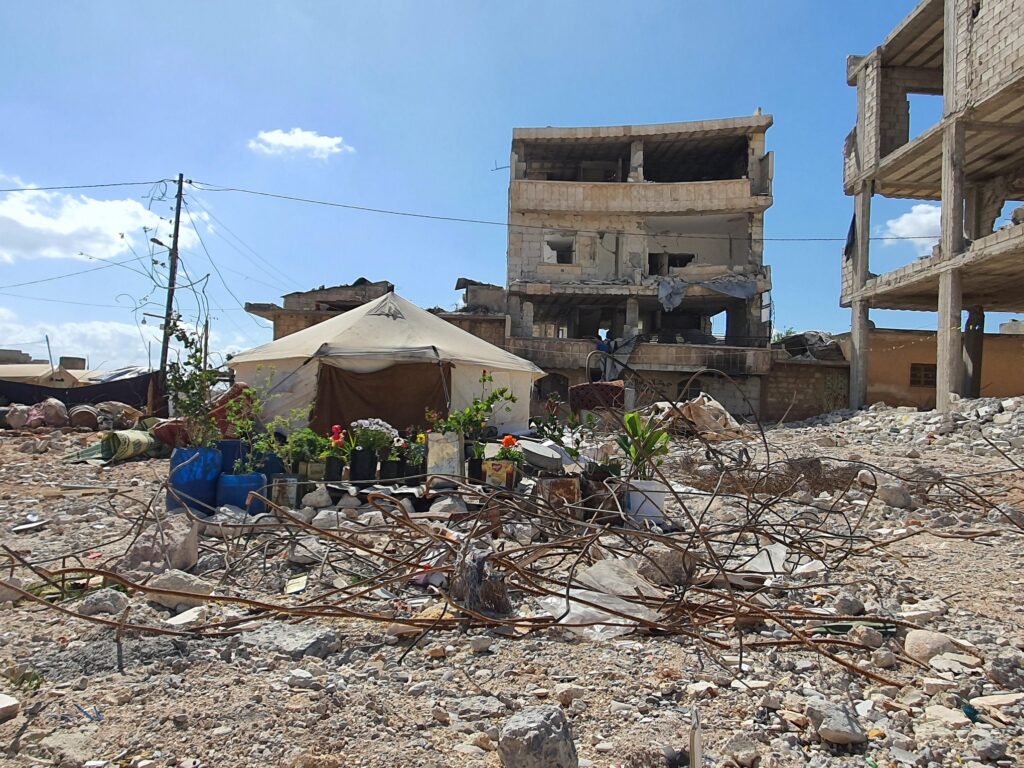
Why this field mission mattered
Two months after the February 2023 earthquakes, the shelter challenge in Northwest Syria was already
moving beyond emergency tents. Families were simultaneously facing damaged homes, prolonged
displacement, overcrowded camps, weak access to structural engineering advice and pressure to repair or
rebuild with very limited resources.
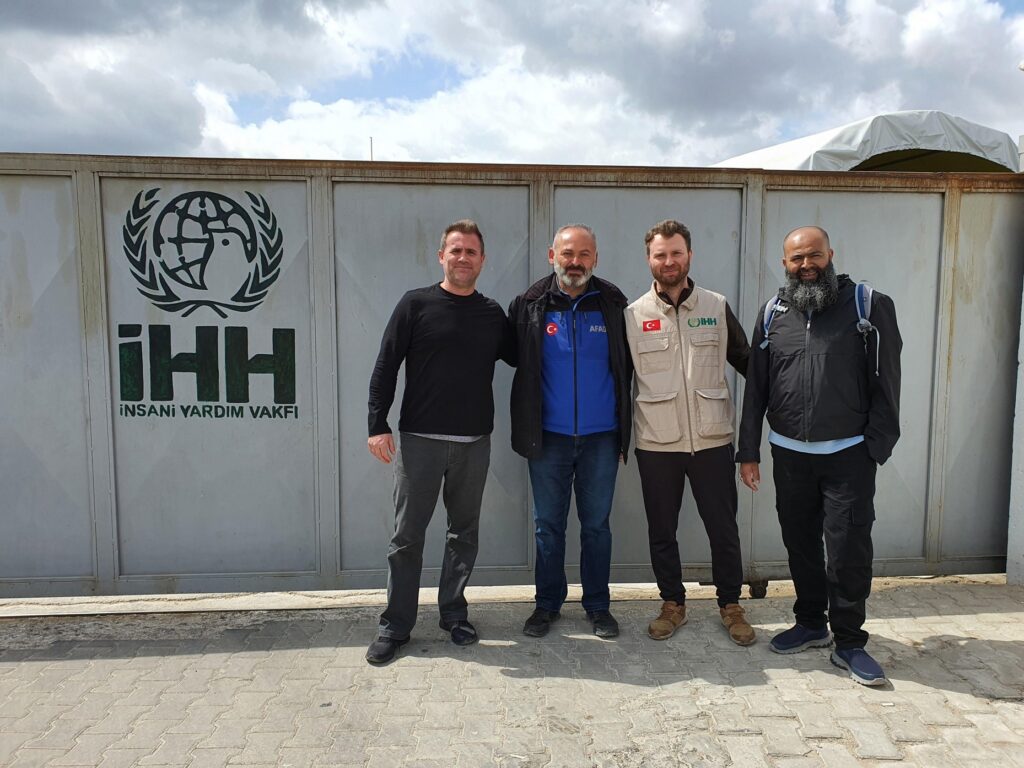
During the first week of April 2023, a Miyamoto International engineering and humanitarian team travelled
inside Northwest Syria with logistical support from IHH and facilitation by an AFAD representative. The
mission observed conditions in Jandairis and, en route, in A’zaz and Afrin. The purpose was rapid
technical observation rather than a comprehensive building-by-building damage assessment.
What we observed
1 | A recovery process was already moving faster than formal assistance
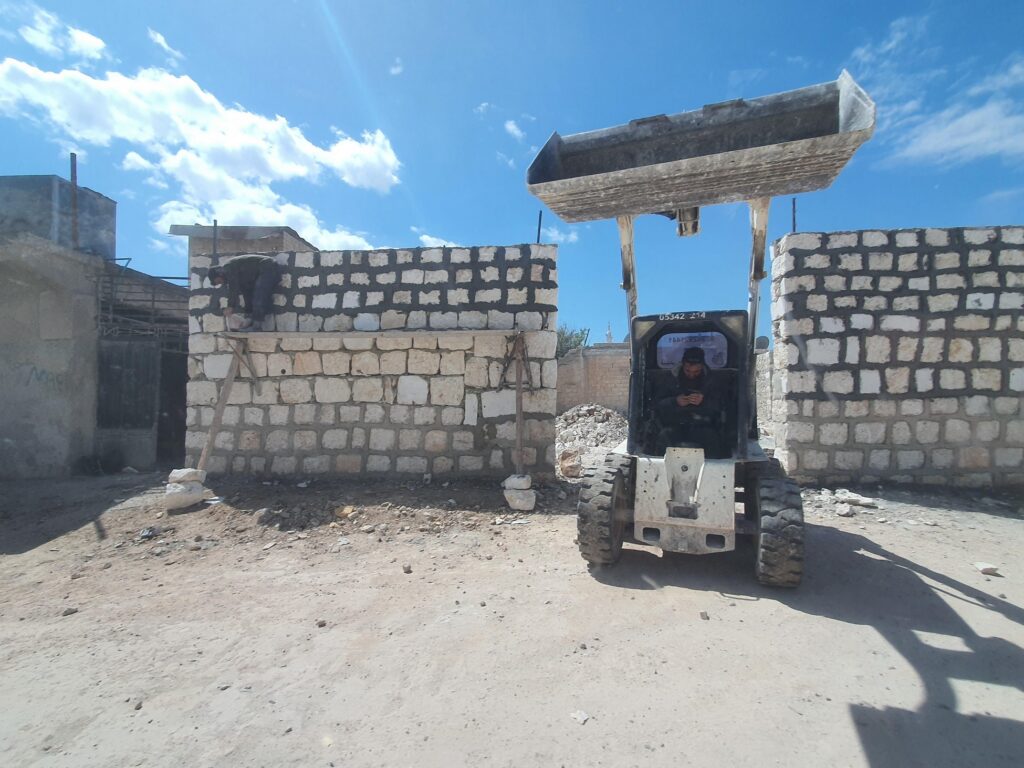
Self-recovery and reconstruction were visibly under way. Local construction markets, workshops, block
production, equipment and material supply chains were active. This local capacity was a major recovery
asset, but it also created a risk: reconstruction could move ahead without sufficient structural engineering
input, quality assurance or clear public guidance on repairability.
2 | Salvaging debris had become an informal recovery economy
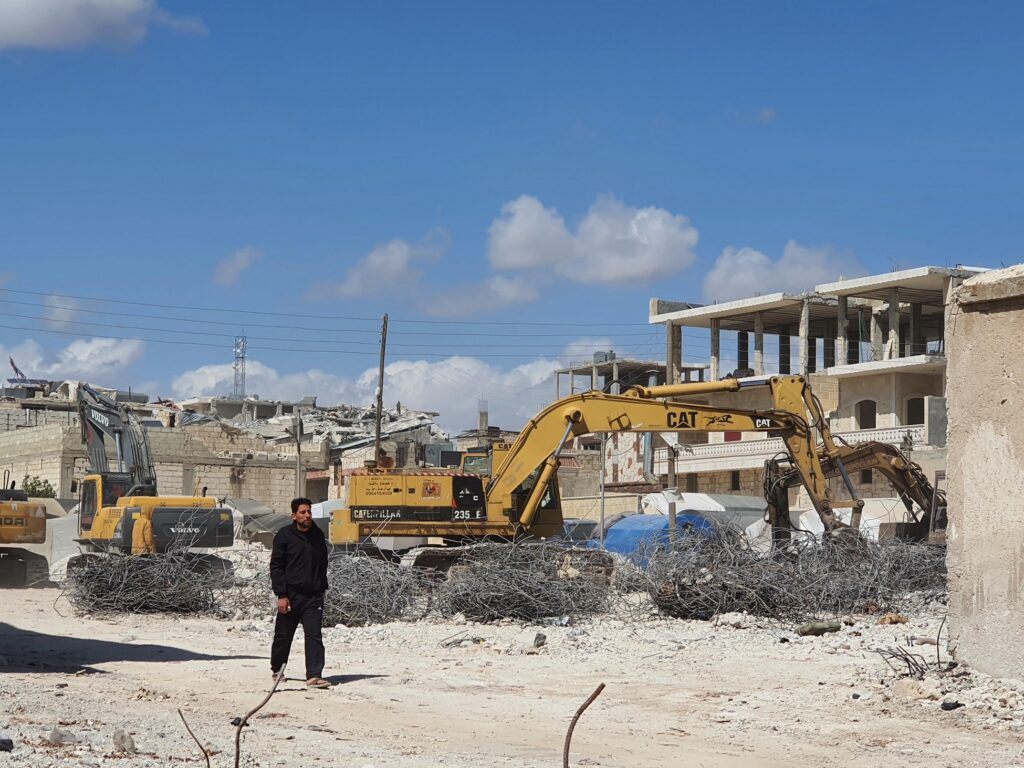
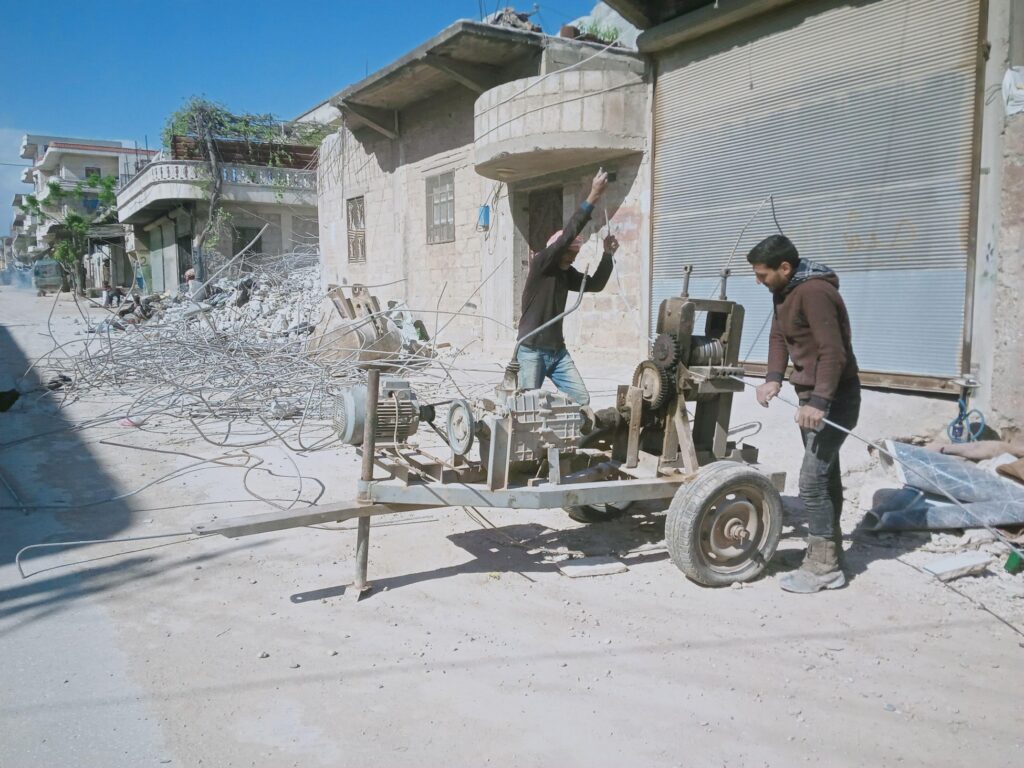
The team observed extensive recovery of reinforcing steel and other materials from earthquake debris.
Salvaging can reduce costs and waste, but unsafe debris handling, uncertain material quality and
uncontrolled reuse of damaged steel can introduce new life-safety risks. The mission report also noted
children participating in material extraction, reinforcing the need for risk communication and safer debrismanagement practices.
3 | Damage assessment needed to connect directly to repair decisions
Communities needed understandable answers to practical questions: Is my house safe to enter? Is it
repairable? What damage is structural? Which repairs are urgent? Which materials can be reused? The
mission identified a gap between broad damage classifications and the household-level technical decisions
required for safe return and self-recovery.
4 | Shelter response and housing recovery could not be treated separately
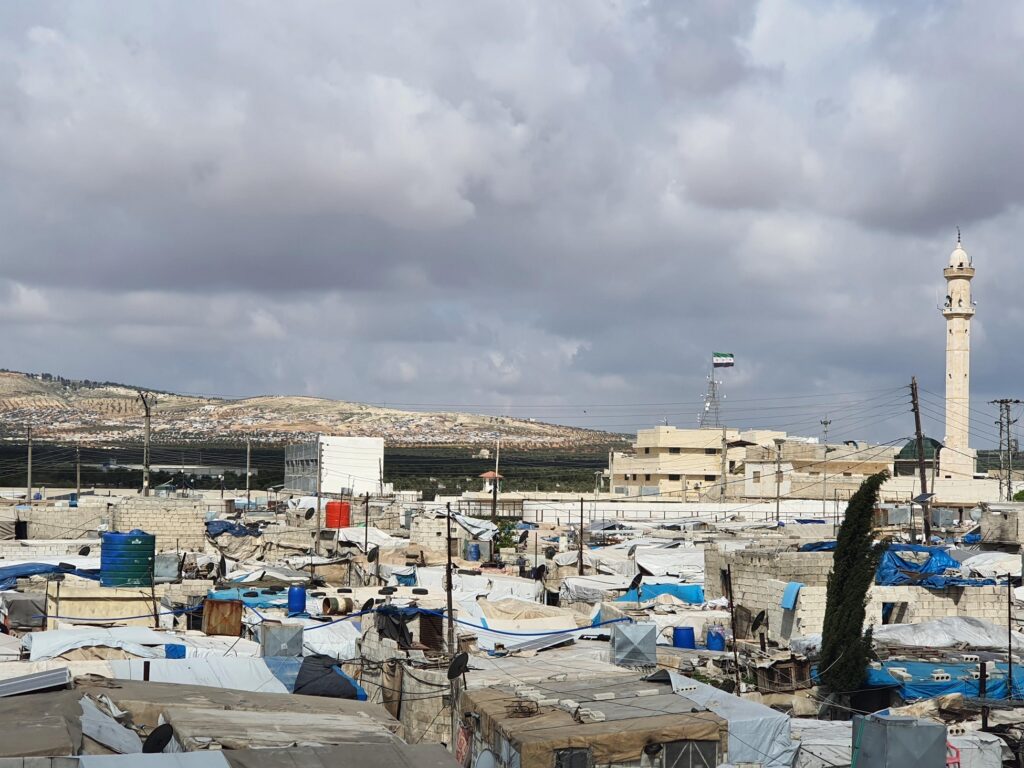
Formal and informal camps had expanded in Afrin, A’zaz and around Jandairis. At the same time,
damaged housing and ongoing self-recovery meant that emergency shelter, settlement congestion,
housing repair and return-home decisions were already interconnected. Technical assistance therefore
needed to support both displaced families and households attempting to recover their homes.
5 | Local construction capacity was present – the gap was safer practice
Cement, blocks, aggregates, fabrication workshops, machinery and building-material stores were widely
available. The more important gap was access to qualified structural engineering, consistent assessment
methods, seismic risk communication and practical quality-assurance guidance for contractors, artisans,
engineers and self-builders.
From observation to technical priorities
The field observations pointed to five immediate priorities for shelter and housing recovery:
- Localized quality-assurance guidance for repair, reconstruction and new construction.
- Simple risk communication on earthquake damage, safe entry, debris handling and reuse of salvaged
materials. - Build Back Safer training for local contractors, masons, artisans and self-builders.
- Technical orientation for local engineers supporting housing, health, WASH and education
infrastructure. - Locally led technical-support mechanisms that combine in-country capacity with remote specialist
engineering support.
Localization as an engineering strategy
The mission reinforced a principle that shaped Miyamoto’s humanitarian technical assistance: international
earthquake expertise is most useful when it strengthens local decision-making. In a constrained-access environment, practical tools, training-of-trainers, technical support hubs, local partnerships and remote specialist backstopping can help local engineers and builders lead safer recovery.
Mission team & acknowledgement
The original field mission report records a Miyamoto humanitarian mission including Dr. Kit Miyamoto,
David Hodgkin, Thomas Fergussan, Manoel Noronha and Zubair Hashmi. The report was prepared by
Zubair Hashmi and Thomas Fergussan with support from Lucienne Noel and Jorge Berrios Cruz. The
mission was made possible through substantial logistical support from IHH Humanitarian Relief Foundation
and field facilitation by IHH and AFAD colleagues.
Important note
These observations reflect a rapid field mission conducted in April 2023. They were not a comprehensive structural
assessment and should not be used to determine the safety or repairability of any individual building. Conditions and
recovery activities changed after the mission, and any current engineering or construction decision requires sitespecific assessment by qualified professionals.
Suggested citation
Hashmi, Z.M.S. (2023/2026). Beyond Rapid Damage Observation: Shelter, Housing & Recovery Risks after the
Türkiye-Syria Earthquakes – field observations from Northwest Syria, April 2023. Adapted for professional portfolio
publication from Miyamoto International field mission working materials.
Presentations
Check Here to see the presentations.