When crises hit, who coordinates and how we define “shelter” matters as much as what we deliver.
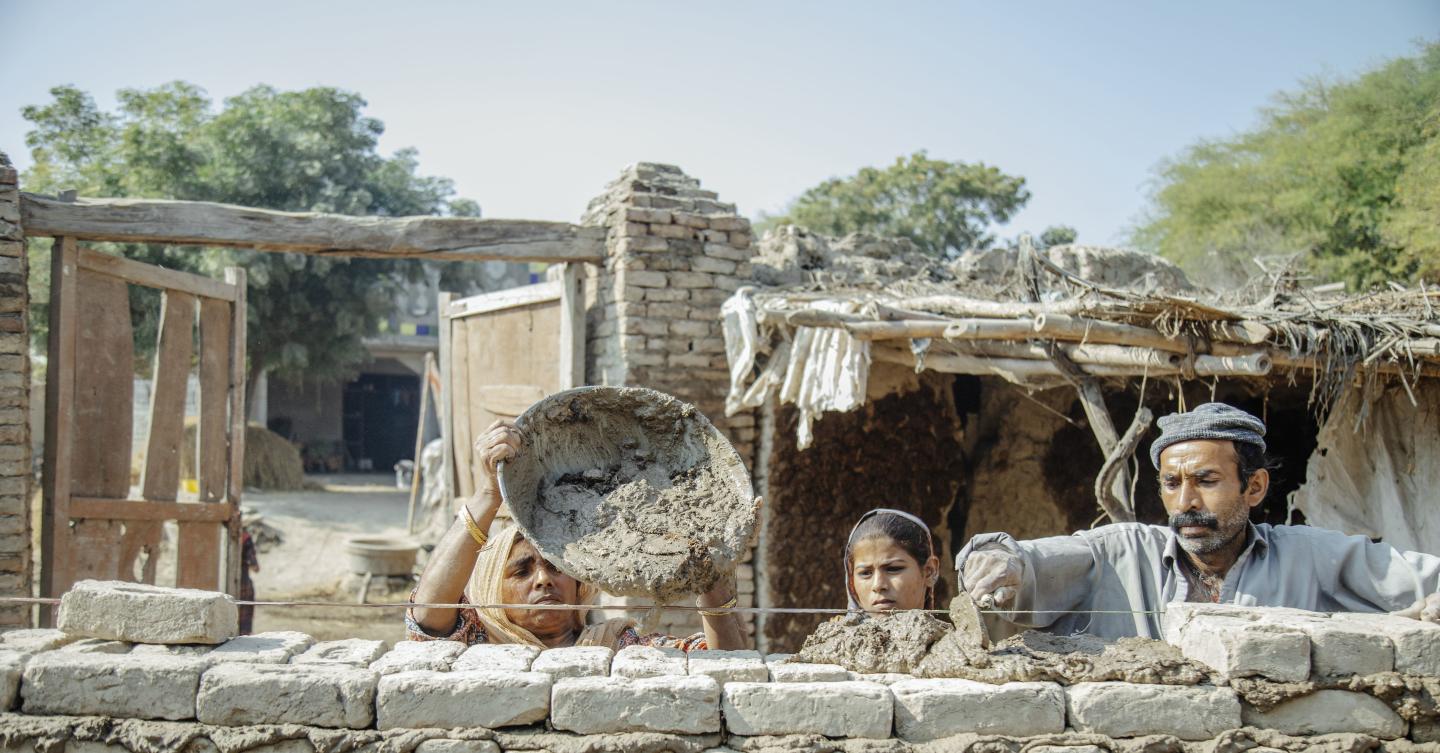
When I look back at Pakistan’s 2010–12 floods and the more recent 2022 floods, one lesson stands out: shelter is not a kit, it’s a function shaped by context.
I still remember a 2010 Shelter Cluster discussion in Punjab where a representative from a riverine community reminded us that for his people, a raised platform was the most meaningful form of shelter. Contrast that with the 2022 Afghanistan earthquake, where the priority was not walls or roofs, but privacy screens. Same word—“shelter”—but very different realities.
Another lesson: the frontline is now truly local. In 2022, faith-based charities and local organizations carried much of the immediate response. The opportunity is not to bypass them, but to engage them. Globally, we’ve seen inspiring synergies—like IHH partnering with Miyamoto International to conduct rapid damage assessments in Syria when access was nearly impossible. That kind of partnership, between trust-based actors and technical specialists, is exactly what Pakistan needs more of.
Shelterize” local engineering capacity: What encourages me most today is that Pakistan now has enough local engineering and community capacity to lead, if they are supported with the right handholding—remote clinics, context-specific SOPs, and mentoring instead of fly-in solutions. Global Shelter and WASH Clusters could support local technical support clinic as a start via existing CoPs.
Redefine “shelter” by context, not by catalogue: Shelter is a function, not a kit. Start from lived risks and cultural norms, then engineer up.
Follow the money: Islamic-national charities + local orgs led the 2022 surge plus World Bank as a key donor that shows how the response shapoed up from relief to recovery with existing structures and capacities however good to learn the gap of transitional assistance that is missing piece. In 2022, Islamic-based national charities and local NGOs provided much of the immediate financing and manpower. Their strengths: speed, trust networks, cultural legitimacy.
With missing transitional assistance and reduced classic humanitarian funding and actors , the cost of 2022 response Vs the outcome could give us the actual price to shape up this time. Defining a new normal in Pakistan to respond to mega disasters